
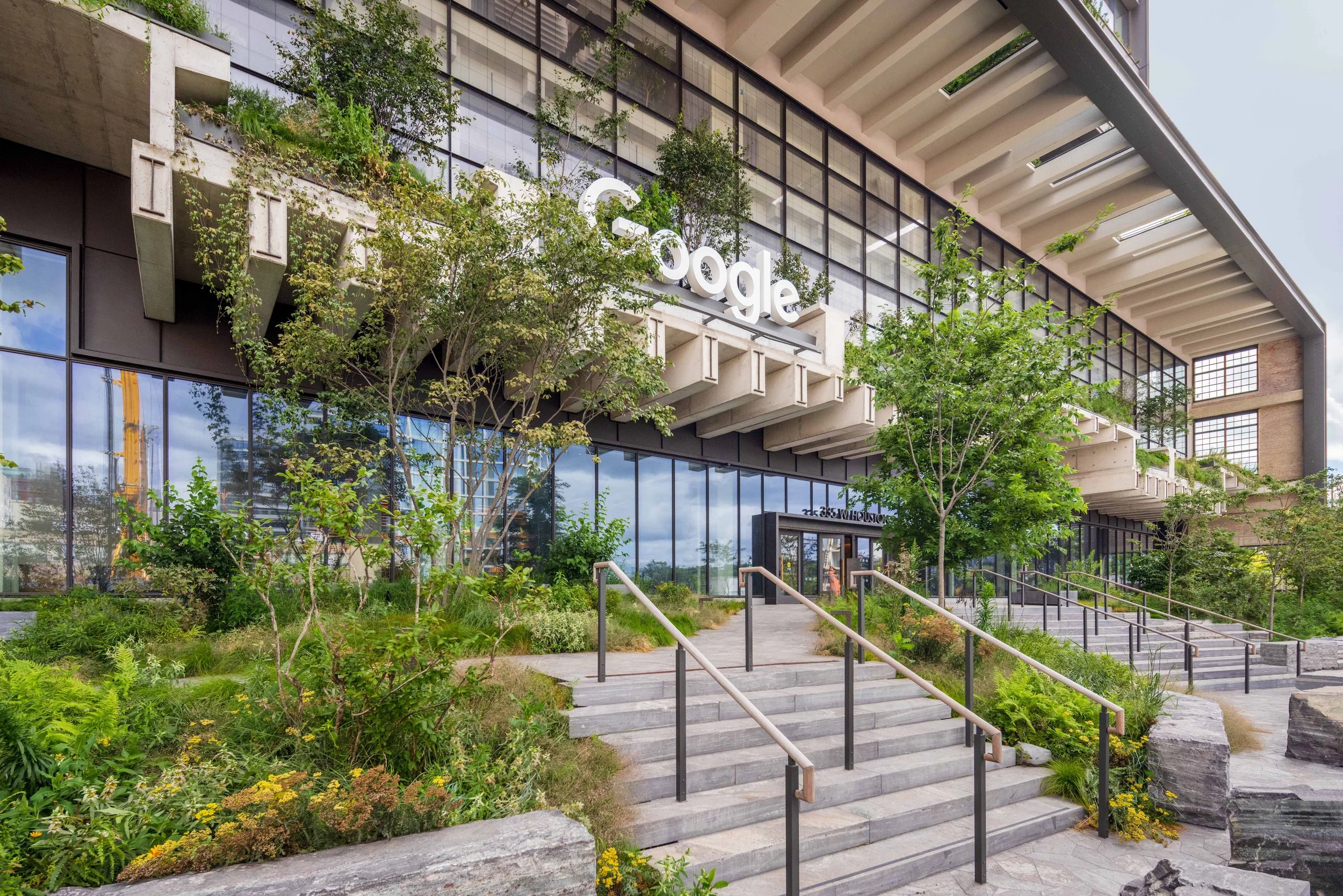
Street view
rewilding new york city
St. John’s Terminal
Second Nature is proud to have advised the ecological design of St John's Terminal, in collaboration with SFEI and Eric Sanderson of the New York Botanical Garden. The project has received numerous awards recognizing its innovative nature design, including an ASLA Honor Award, ASLA-NY Honor Award, RPA Project of the Year, and AIANY Citation for Biodiversity (the first-ever given for biodiversity). We worked closely with the project architect and landscape architect to integrate high-quality nature in this highly active setting, connecting urban dwellers to daily experiences of biodiversity.
The building incorporates 1.5 acres of predominantly native vegetation, including dozens of native trees, at street level, in rail bed gardens, and on terraces, creating an ecological sense of place in dense Manhattan. We worked closely with NYC Bird Alliance, New York Botanical Garden, and other local experts to incorporate the best thinking on New York forest ecosystems, climate resilience, and biodiversity into the building design.
******
Opened in February 2024,St. John’s Terminal serves as the New York headquarters for Google’s global business organization. The building adaptively reimagines a former rail terminal into a 12-story modern office building supporting more than 3,000 Googlers. St. John’s Terminal advances ambitious sustainability goals, with approximately 78,400 metric tons of carbon dioxide equivalent emissions projected to be saved, compared with creating a new structural foundation; achievement of LEED v4 Platinum Certification for its core and shell development; and LEED v4 Platinum Certification being pursued for interiors.
The building has 1.5 acres of predominantly native vegetation, redefining what “green space” means for commercial real estate in New York. This not only enhances the experience for occupants but also benefits the local ecology. Over 95% of the exterior plants at St. John’s Terminal are native to New York State, reknitting the building into the local system. Over 70 bird species have been documented using the habitat created at St. John’s Terminal — a remarkable level of ecological function in this highly urban setting.
Project Architect Rick Cook describes St. John’s Terminal as “re-knitting an ecosystem, from the insects to the birds.” The project has been called “a beacon of eco-friendly, team-centric innovation shaping the urban landscape."
Second Nature Team
Emily Erickson Robin Grossinger
Megan Wheeler
Project Sponsor: Google
Site Developer: Oxford Properties